Can You Take Cannabis Out of Minnesota? Why It Can't Leave the State or Go Through the Airport
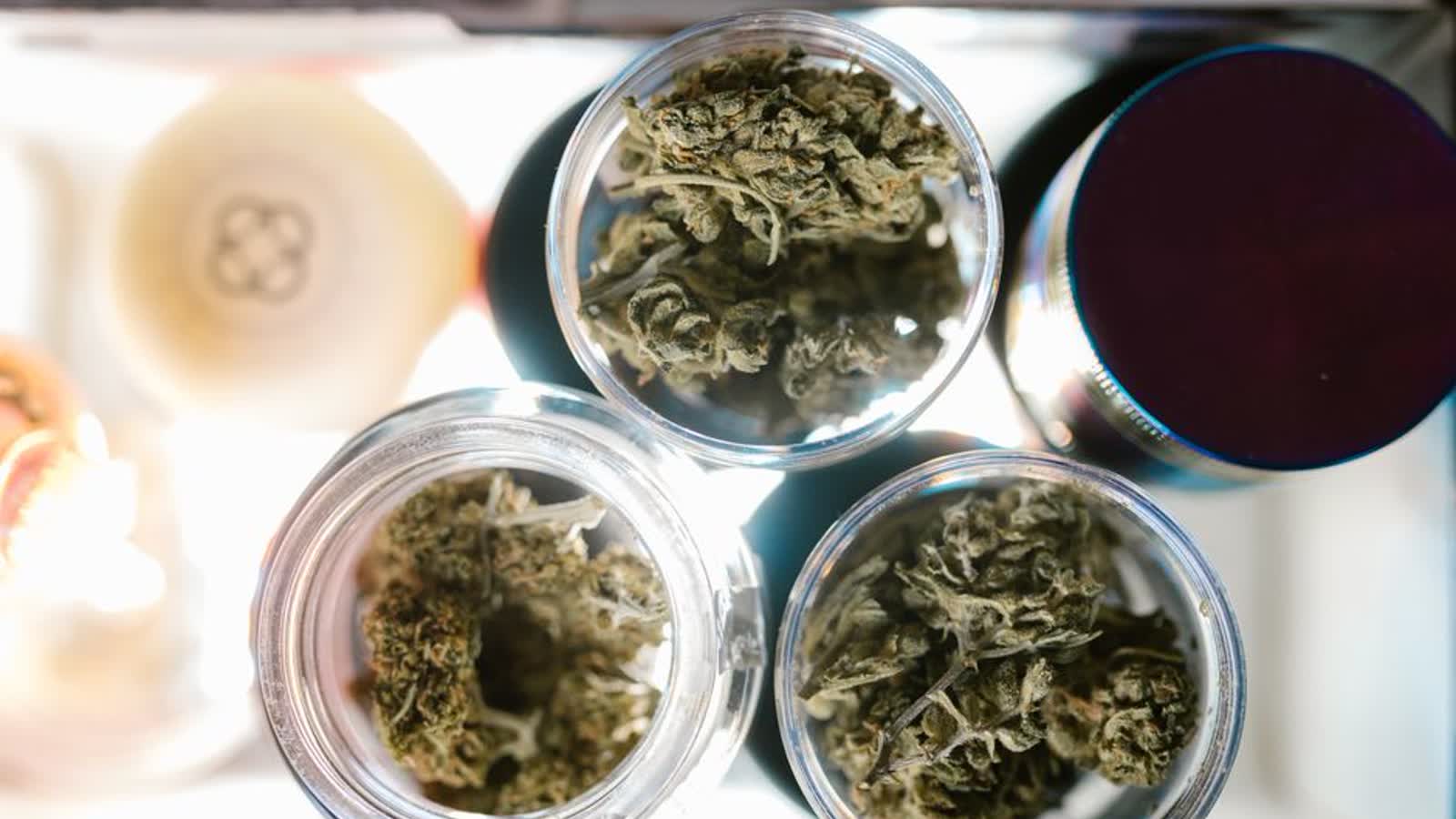
A purchase from a licensed Minnesota dispensary is legal to carry home, use at a private residence, and keep within the limits state law sets. That legality has a boundary most customers don't think about until they're standing at airport security, or packing for a trip out of state. It's a common question at the counter, and it deserves a straight answer rather than a guess. Below: what Minnesota's adult-use law actually covers, why that coverage stops at the state line, and why an airport is treated differently even on a flight that starts and ends inside Minnesota.
What Minnesota Law Actually Authorizes
Minnesota's adult-use cannabis law sets specific possession and transport limits for adults 21 and older. Under Minn. Stat. 342.09, subdivision 1, an adult may possess or transport up to two ounces of cannabis flower in a public place, possess up to two pounds of flower at a private residence, possess or transport up to eight grams of cannabis concentrate, and possess or transport edible cannabis products or lower-potency hemp edibles containing a combined total of 800 milligrams or less of THC. The Office of Cannabis Management confirms the same limits and lists where use is permitted: private residences, private property where the owner allows it, and licensed establishments or events that permit on-site consumption.
Location matters here. The two-pound home limit only applies at a private residence; the two-ounce figure governs public places; separate rules apply to concentrate and edibles no matter where they're kept. Every one of those figures, and every location the statute names — private residences, qualifying private property, licensed on-site consumption venues — sits inside Minnesota, under Minnesota's own regulatory authority.
What the statute doesn't do is extend that authorization anywhere else. Its permission is built entirely around Minnesota's own regulatory scheme. For the specifics of what's allowed at home, in a vehicle, and in public, see our guides on Minnesota's cannabis purchase and possession limits and Minnesota's open package law for transporting cannabis in a car. Neither the statute nor the state's own guidance says anything about what happens once a product, or a person carrying one, leaves Minnesota. That silence isn't an oversight. It's simply outside what a state law can govern.
Why "Legal in Minnesota" Stops at the State Line
Cannabis is still classified as a Schedule I controlled substance under the federal Controlled Substances Act, the same classification it's held since the law was enacted. As Cornell Law School's legal reference explains, that federal classification applies uniformly across all fifty states and every federal jurisdiction, regardless of what any individual state has legalized. Minnesota legalizing adult-use cannabis changes what Minnesota itself will enforce inside its own borders. It doesn't, and legally can't, change cannabis's status under federal law.
The FDA's own guidance makes the same point from a different angle: federal regulatory authority over cannabis and cannabis-derived products operates independent of state law, applying the same way whether a person is in a state that has legalized cannabis or one that hasn't. For a closer look at where use itself is and isn't permitted within Minnesota, see where cannabis use is and is not allowed in Minnesota. State legalization is real, and it works within the state. It just was never written to travel with the product.
Why Airports Are Different from the Rest of Minnesota
Airports are federal jurisdiction. Airport security screening falls under the Transportation Security Administration; commercial flights fall under the Federal Aviation Administration. Both are federal agencies, operating under federal law, even for a flight that begins and ends inside Minnesota. That federal layer is why an airport functions differently than, say, a Minnesota sidewalk, even though both sit physically inside the state.
According to reporting on Minneapolis–St. Paul International Airport, TSA's screening mission is built around detecting threats to aviation safety, not searching for drugs. The agency's canine teams are trained to detect explosives, not cannabis, and officers aren't actively looking for it during a routine screening. But if cannabis turns up during that screening, TSA's practice is to refer the matter to airport police, because cannabis remains illegal under federal law regardless of Minnesota's state-level rules. The same reporting notes that MSP's own airport commission has moved to separately prohibit smoking cannabis anywhere on airport property, a concrete example of the airport treating cannabis differently than the rest of the state does.
This federal layer doesn't care whether the trip is a short in-state hop or something longer. A flight that departs and lands within Minnesota still passes through the same federally regulated checkpoint, the same federally regulated airspace, as any other commercial flight. It's the airport's federal status, not the distance traveled or the destination, that puts cannabis possession there on different footing than possession on a Minnesota street or in a Minnesota home.
Frequently Asked Questions
Can I bring cannabis I bought in Minnesota on a domestic flight?
No. Airports and commercial flights are under federal jurisdiction, and cannabis is a Schedule I controlled substance under federal law regardless of Minnesota's state legalization. That applies even on a flight that starts and ends inside Minnesota, because TSA screening and FAA authority are both federal.
Will TSA actually search for cannabis at MSP?
TSA's screening mission is aviation-threat detection, not narcotics enforcement. Officers aren't actively looking for cannabis, and their canine teams are trained on explosives, not drugs. But if cannabis is found during screening, TSA's practice is to refer the matter to airport police, because possession remains federally illegal.
Does it matter how much cannabis I have, or what form it is?
No. Minnesota's possession limits — two ounces of flower in public, eight grams of concentrate, 800 milligrams of combined THC in edibles — describe what's lawful to possess inside Minnesota. They don't apply once cannabis leaves the state or enters a federal space like an airport. At that point federal law controls, not the state limit, regardless of amount or form.
Can I drive across the border into a neighboring state with cannabis I bought here?
Minnesota's adult-use law only authorizes possession and transport within locations governed by Minnesota law. It doesn't extend across a state line, and cannabis remains federally illegal to transport between states regardless of what any individual state permits within its own borders.
The Practical Takeaway
Minnesota's adult-use law is real, and it works well for what it was built to cover: purchase, possession, and use inside the state. It was never written to follow a product past the state line or into a federal space like an airport, and no amount of state legalization changes that. The simplest way to think about it: what's bought here is meant to stay here. Any question about what's allowed in another state belongs to that state's own regulator to answer, not something to assume from Minnesota's rules.
For adults 21 and older only. Cannabis products have not been analyzed or approved by the FDA and are not intended to diagnose, treat, cure, or prevent any disease. Keep out of reach of children. Do not operate a vehicle or machinery after use. This article is general information about products sold in Minnesota, not medical advice; talk to a licensed clinician about your health.