THC, THCA, and CBD: What the Three Label Numbers Actually Mean
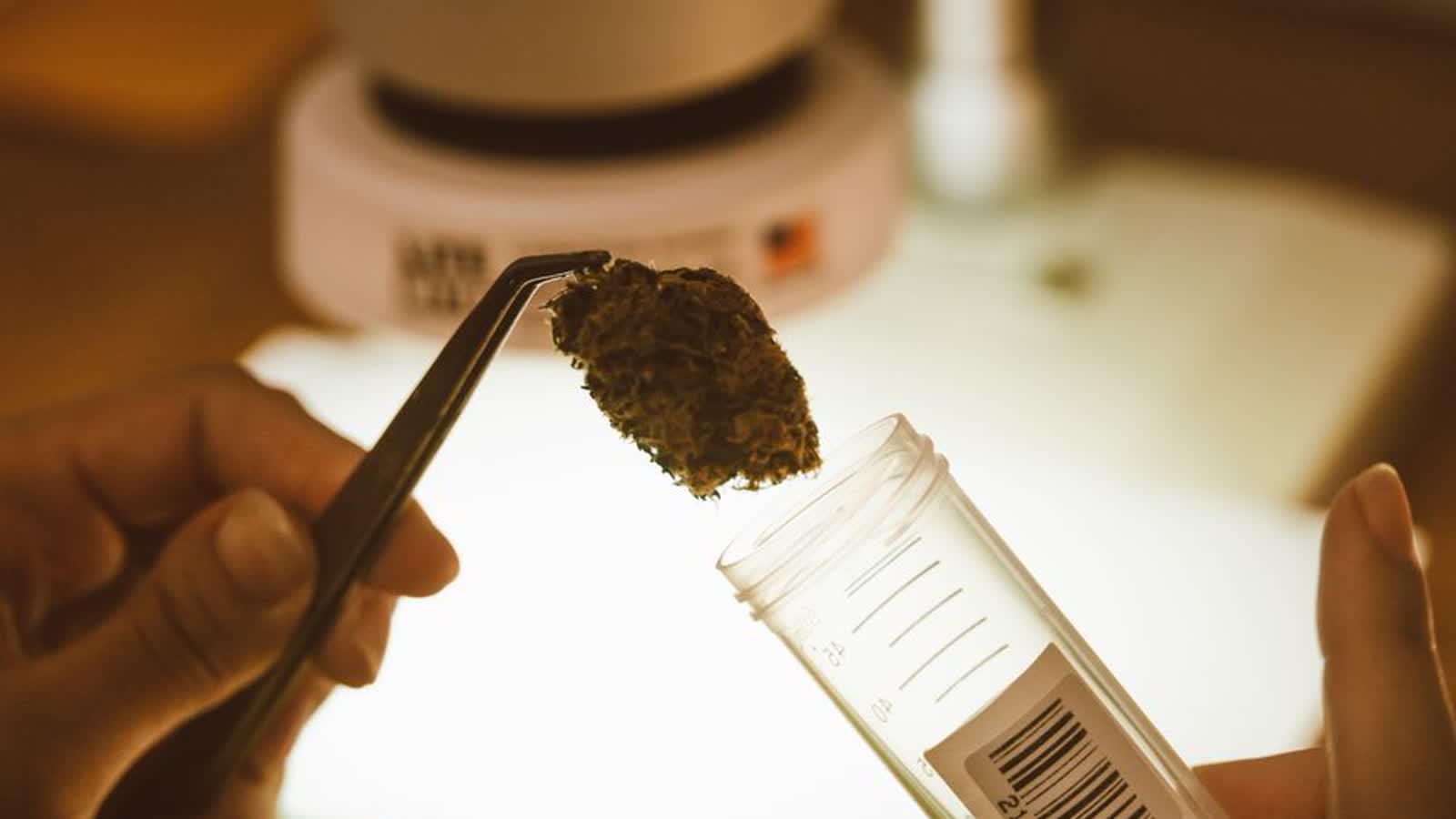
Look at a Minnesota cannabis label and you'll usually see more than one potency number. THC, THCA, and Total THC on a flower label. CBD and CBDA on a tincture. None of these are typos, and none are duplicates — each is measured separately, and state law defines a specific formula for turning two of them into the figure most labels lead with. Once you know that formula, the label stops looking like a puzzle and starts reading like arithmetic.
What "Total THC" Actually Means
THC vs. THCA: the same molecule, two chemical states
THC and THCA are related, but they aren't the same thing. THCA (tetrahydrocannabinolic acid) is the form cannabis produces naturally in the plant — it's what's present in raw, unheated flower. Heat it, and THCA converts to THC through a chemical change called decarboxylation. That's why a lab testing raw flower usually finds a high THCA percentage next to a much lower THC percentage: most of the conversion just hasn't happened yet. Both numbers are measured independently, and both show up on the label.
The Minnesota formula: Total THC = (THCA x 0.877) + THC
State law spells out exactly how the two combine. Under Minn. Stat. 342.01, subd. 69b, "Total THC" means the sum of the percentage by weight of tetrahydrocannabinolic acid multiplied by 0.877, plus the percentage by weight of all tetrahydrocannabinols. That 0.877 isn't a rounded guess. It reflects the molecular weight relationship between THCA and THC — converting one to the other releases a small amount of mass as carbon dioxide and water vapor. Total THC, in short, is the state's way of expressing what a product's potency would measure after that conversion happens.
CBD and CBDA: The Non-Intoxicating Pair
The parallel structure
CBD (cannabidiol) has its own acidic precursor too: CBDA, tracked the same way THC and THCA are. Minnesota's statute defines "cannabinoid" broadly enough to cover both. Minn. Stat. 342.01, subd. 10 describes a cannabinoid as any naturally occurring, biologically active chemical constituent of the hemp or cannabis plant that acts on the body's cannabinoid receptors — "including but not limited to tetrahydrocannabinol and cannabidiol." CBD and CBDA get measured and disclosed as part of that same cannabinoid profile as THC and THCA.
The federal hemp/marijuana line
Federal law draws its line between hemp and marijuana based on THC, not CBD. Under the 2018 Farm Bill, hemp is cannabis with a delta-9 THC concentration of no more than 0.3% on a dry-weight basis; anything above that threshold is treated as marijuana. The FDA notes that CBD itself is not psychoactive and isn't the compound behind cannabis's intoxicating properties. The agency has approved exactly one CBD-based drug product, for specific seizure disorders, and treats other CBD products separately from that approval.
What Minnesota Law Requires the Label to Show
What has to appear on the label depends on the product type. Under Minn. Stat. 342.63, cannabis flower and hemp plant parts must show the cannabinoid profile, a batch number, net weight, the cultivator's name and license number, verification that the product was tested under section 342.61, the universal cannabis symbol, and the statement "Keep this product out of reach of children." Cannabinoid products — edibles, concentrates, topicals — carry more requirements on top of that: the cannabinoid profile has to appear both per serving and in total, along with serving size, an ingredient list, net weight, the manufacturer's name and license number, and a warning symbol sized to the statute's exact dimensions. For a full field-by-field walkthrough, see how to read a Minnesota cannabis product label.
Where the Numbers on the Label Come From
None of these figures are estimates. Under Minn. Stat. 342.61, every cannabis and hemp product sold in Minnesota has to be tested for potency, among other things, before it reaches a shelf, using procedures the Office of Cannabis Management sets by rule. That test result is the cannabinoid profile the label under section 342.63 is required to disclose. Curious what actually happens during that process? See how those numbers are lab tested.
Want the underlying numbers behind one specific product's label? The full test result is published as a certificate of analysis, available for our products through the lab-results page.
Total THC, in Practice
Here's the arithmetic with illustrative numbers, not a specific product's actual results. Say a flower sample tests at 20% THCA and 1% THC. Total THC works out to (20 x 0.877) + 1 — about 18.5%. That's the figure most flower labels lead with, since it approximates potency after the flower is heated rather than in its raw state. The same formula, and the same kind of testing, underlies the category-by-category ceilings described in Minnesota's potency caps by product category, which apply to edibles and beverages using Total THC per serving and per package.
Frequently Asked Questions
Why is THCA higher than THC on a raw flower label?
Raw cannabis flower stores most of its cannabinoid content as THCA, the acidic form. THCA doesn't become THC until it's heated — a process called decarboxylation. Minnesota's Total THC formula, defined in Minn. Stat. 342.01, subd. 69b, accounts for this by multiplying the THCA percentage by 0.877 before adding it to the THC percentage, so the label reflects what the product would measure as THC once heated, not what it measures raw.
Is Total THC the same number as the THC percentage printed on the label?
Not exactly. THC on its own refers to the already-converted tetrahydrocannabinol present in the product. Total THC is a calculated figure: the THC percentage plus 87.7% of the THCA percentage, per Minn. Stat. 342.01, subd. 69b. Most product labels show Total THC because it estimates potency after the product is used, while still listing the individual THC and THCA figures separately.
Does CBD show up in the same kind of calculation?
Minnesota's testing and labeling framework tracks CBD and its acidic precursor CBDA the same structural way it tracks THC and THCA, listing them as part of the required cannabinoid profile under Minn. Stat. 342.63. CBD itself is non-psychoactive; the FDA notes it isn't the compound responsible for cannabis's intoxicating effects.
Where do the numbers on a 5D Dispensary product label come from?
Every product is tested under Minn. Stat. 342.61 before it reaches the shelf, and the resulting cannabinoid profile is what the label under Minn. Stat. 342.63 must disclose. You can match a specific product's label numbers to its full test results on the certificate of analysis, available through our lab-results page.
I have questions about how THC or CBD will affect me. Who should I ask?
A budtender can explain what's on a label and how a product is tested and regulated. For any question about how a product might affect your body or interact with a health condition or medication, talk to a licensed clinician — that's a medical question, not a labeling one.
Conclusion
THC, THCA, Total THC, CBD, and CBDA aren't five unrelated numbers. They're one chemistry story, told in the two forms testing can measure and the one figure Minnesota law defines by formula. Every number on the label is backed by required testing and a required format, so the math on the package is checkable, not marketing. Next time you're at the counter, or reading a certificate of analysis, that math should read as plain arithmetic. And for anything about how a product might affect you personally — that's a question for a licensed clinician, not a label.
For adults 21 and older only. Cannabis products have not been analyzed or approved by the FDA and are not intended to diagnose, treat, cure, or prevent any disease. Keep out of reach of children. Do not operate a vehicle or machinery after use. This article is general information about products sold in Minnesota, not medical advice; talk to a licensed clinician about your health.